Solar Racking Cost: Material vs. Labor Breakdown
Solar racking cost includes both hardware and labor. The split depends on system type, site access, and local labor rates. This guide shows how to separate materials from installation when reviewing a quote to make informed sourcing decisions.
- Solar racking cost is the sum of hardware and labor, with the split varying by system complexity and site conditions.
- Hardware includes rails, clamps, flashings, and fasteners; labor includes prep, mounting, wiring, and inspections.
- Review quotes by separating material and labor lines to compare vendors fairly.
- Site access and roof complexity can shift labor costs significantly, sometimes outweighing hardware differences.
- A worked example shows how to allocate budget between materials and installation without relying on fixed percentages.
Solar racking cost is not a single number. It is the sum of hardware, labor, and site-specific factors that shape the final invoice. When buyers review quotes, they often see a lump sum and struggle to compare options. This guide breaks down how material and labor interact in a typical solar project.
What counts as racking material?
Racking material covers the physical structure that holds the modules in place. The core parts are rails, mid clamps, end clamps, mounting feet, flashings, and fasteners. Each component has a function. Rails support the module weight and transfer loads to the roof or ground. Mid clamps secure modules between rails. End clamps hold the ends. Mounting feet attach the structure to the substrate. Flashings prevent water intrusion at roof penetrations. Fasteners secure every joint.
The material list also changes with system type. A ballasted ground-mount system uses concrete blocks or ballast trays instead of anchors, which adds weight and handling complexity. A roof-mounted system uses penetrating or non-penetrating attachments depending on roof age and warranty requirements. A tilt system adds angle-specific components and often extra rails to manage the geometry. Each change alters the bill of materials.
When sourcing, buyers should check whether the quote includes flashings, sealants, and spare fasteners. These small items are easy to overlook but can delay a job if missing. A quote that lists only rails and clamps is incomplete.
How labor is structured in installation
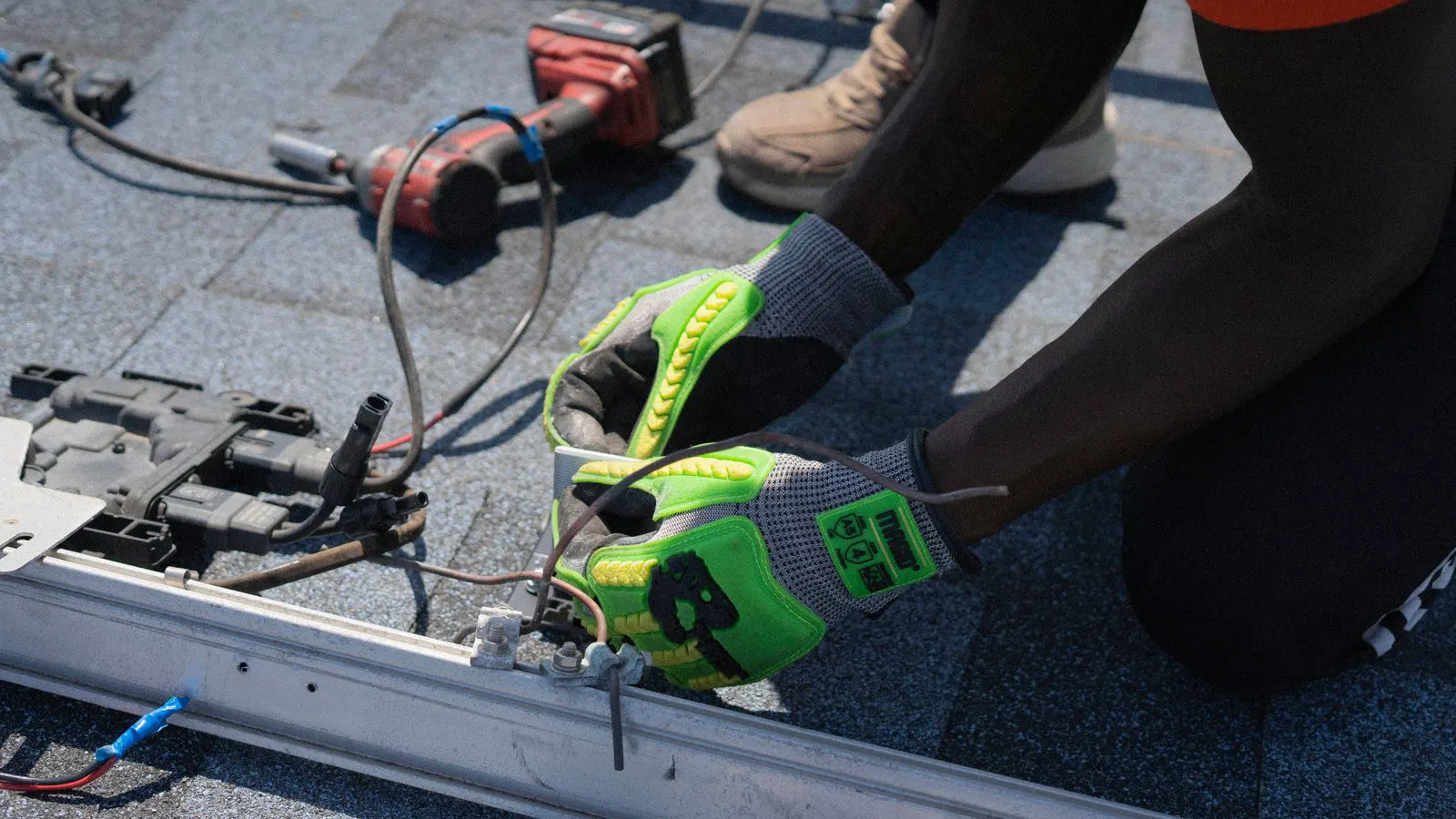
Solar installation labor includes more than lifting modules onto rails. The typical scope covers site preparation, racking layout, mounting, wiring, and inspection. Site preparation may involve measuring the roof, marking attachment points, and moving existing equipment. Mounting includes drilling, fastening, and leveling rails. Wiring runs from the racking area to the inverter or combiner box. Inspections are required at several stages, which adds time and sometimes rework if details are missed.
Labor rates vary by region, crew size, and project duration. A small residential job may be done by one or two installers over a few days. A large commercial roof may require multiple crews working in shifts over several weeks. The longer the job, the more labor hours accumulate. This is why two quotes for the same hardware can differ widely in labor.
Buyers should ask what is included in the labor line. Some quotes separate prep, mounting, and wiring. Others lump them together. A detailed breakdown makes it easier to identify gaps.
How site conditions shift the split
Site conditions can move cost from material to labor. A flat, accessible roof with standard penetrations is faster to install than a complex roof with multiple planes, skylights, and HVAC units. Each obstruction adds layout time and extra flashing. A steep roof increases safety requirements and slows work. A ground site with poor soil or heavy rock may require deeper foundations or extra ballast, adding both material and labor.
Weather and season also matter. Installation during peak season may cost more due to demand. Off-season work may be cheaper but carries weather risk. Buyers should factor these variables into the labor estimate rather than assuming a fixed split.
A common mistake is to compare hardware prices in isolation. If one vendor offers cheaper rails but requires more flashing due to a different attachment method, the total cost may be higher. The split between material and labor depends on the whole system, not just the rail price.
How to read a quote for material and labor
A useful quote separates hardware from labor. Hardware should list each component by type and quantity. Labor should list tasks or phases, not just a single line. If the quote only shows “racking and installation,” ask for a breakdown.
The table below shows how a typical commercial rooftop project might be structured. The numbers are placeholders to illustrate the format, not real prices.
| Cost Component | Typical Items | How It Varies |
|---|---|---|
| Rails | Main rails, secondary rails | Length, gauge, coating |
| Clamps | Mid clamps, end clamps | Module width, rail spacing |
| Attachments | Feet, flashings, sealants | Roof type, penetration count |
| Fasteners | Bolts, washers, anchors | Material, size, quantity |
| Labor prep | Survey, layout, marking | Roof complexity, access |
| Labor mounting | Drilling, fastening, leveling | Crew size, roof pitch |
| Labor wiring | Cable runs, connectors | Distance to inverter, conduit |
| Labor inspection | Permits, inspections | Jurisdiction, rework |
This format makes it easy to see where money goes. A buyer can compare two quotes by checking the rail quantity, the flashing count, and the labor hours. If one quote has more flashings, the labor for sealing may also be higher.
Worked example: a commercial rooftop project
Imagine a commercial building with a flat roof, 400 modules, and standard roof penetrations. The racking system uses rail-mounted mid and end clamps. The site has good access, and the roof is in good condition. The project requires one crew of three installers over two weeks.
The hardware portion includes rails for the module array, clamps for each module, mounting feet for each rail line, and flashings at each penetration. The labor portion includes a site survey, marking attachment points, drilling and fastening, wiring the modules to the inverter, and passing two inspections.
Now consider a second scenario. The same building has a complex roof with multiple skylights and HVAC units. The racking layout must route around these obstructions. This adds extra rails, more flashings, and sealant. The labor portion increases because the crew spends more time on layout and sealing. The hardware cost rises slightly, but the labor cost rises more because of the added complexity.
The key point is that the split changes with the site. In the first scenario, hardware and labor are balanced. In the second, labor takes a larger share. A buyer who only looks at rail price will miss this shift.
How to make sourcing decisions with this split
Use the breakdown to guide sourcing. If hardware is the larger share, focus on material quality, warranty, and coating. Check whether the galvanized finish meets the corrosion requirements for your climate. Review the Pre-Deployment Checklist for Concrete Ballasted Systems if you are using ballast, since the attachment method affects both material and labor. If labor is the larger share, focus on crew experience and site access. Ask about inspection timelines and rework policies.
The troubleshooting of corrosion in galvanized solar racking is a long-term concern. A cheap material may fail faster in coastal or high-humidity areas, increasing future labor costs. A more durable material may cost more upfront but reduce maintenance.
When reviewing a solar project budget, separate material and labor in your own spreadsheet. Use the quote breakdown to populate the lines. Then adjust for site conditions. This gives you a clearer picture than a single total.
What to ask your installer
Ask for a line-item quote. Ask what is included in the labor line. Ask whether flashings and sealants are in the hardware or labor. Ask about inspection fees and permit costs. Ask about the crew size and schedule. Ask about warranty terms for both materials and workmanship.
If the quote does not separate these items, request it. A professional installer should be able to provide a detailed breakdown. If not, that is a sign to look elsewhere. A clear quote reduces risk and makes comparison easier.
The goal is not to find the cheapest number. The goal is to understand where the money goes. That knowledge helps you ask better questions and make a decision that fits your project.
Frequently asked questions
What is the typical split between material and labor in a solar project?
The split varies by site, system type, and region. There is no fixed percentage. A simple flat roof may have a near-even split, while a complex roof or difficult site can shift more cost toward labor.
Do flashings count as material or labor?
Flashings are usually listed under hardware, but the labor to install and seal them is part of the installation cost. A detailed quote should show both.
How does roof complexity affect labor cost?
More roof planes, obstructions, or penetrations increase layout time and sealing work. This adds labor hours even if the hardware list stays similar.
Can I compare two quotes if one has a different racking layout?
Only if you account for the differences in component counts and labor time. A layout with more rails or flashings will have a different cost structure, so normalize the comparison before deciding.
What should I do if a quote does not separate material and labor?
Ask the installer for a line-item breakdown. If they cannot provide one, treat that as a risk factor and consider other vendors who are transparent about their pricing.